
Guttman Lab
Decoding the roles of non-coding RNAs in shaping nuclear structure and gene expression.
We are an integrated team of experimental and computational biologists who work together to understand how nuclear compartments control gene expression programs and cell state decisions. We believe that the strength of our science arises from the diversity of our ideas and experiences. We are committed to fostering an inclusive and diverse laboratory culture and as such welcome students, postdocs, and visiting scholars from all backgrounds to join our group.


Our Lab
We seek to understand fundamental principles of biological regulation within the nucleus. Our team of scientists from diverse backgrounds allows us to approach these questions from a holistic perspective with an integrated strategy. We do not make a clear distinction between experimental and computational projects; our projects are goal-centered and use all tools critical for success. When necessary, we develop new tools to answer questions that were previously inaccessible and apply these tools to decipher new paradigms and improve our understanding of essential biological functions.
In The News

Gene Proximity to Nuclear Speckles Drives Efficient mRNA Splicing
A news article in The Scientist discusses the latest research into significantly more efficient mRNA splicing based on its proximity to nuclear speckles.
“This idea that functional kinetic coupling of two very diverse but critically integrated processes is achieved through physical spatial organization, remodeling of DNA architecture, is something that I wouldn’t have necessarily anticipated,” Guttman said, “but I think it’s incredibly exciting, and more generally, in thinking about novel mechanisms of how quantitative regulation occurs in the cell.”
Read the article in The Scientist ▶︎

Featured this week in Caltech News: Prashant Bhat’s latest work on nuclear speckles
Featured this week in Caltech News: New work on nuclear speckles, now published in Nature, “Genome organization around nuclear speckles drives mRNA splicing efficiency“.
Previously, we tended to think of splicing as a constant—you make a pre-mRNA; you splice it. Now we know that the physical organization of the nucleus makes a big difference in the efficiency of splicing and, by extension, other processes. – Prashant Bhat, PhD
Read the article in Caltech News ▶︎

Mitch Guttman on the Active Motif Epigenetics Podcast
In a recent interview on the Active Motif Epigenetics Podcast with host Dr. Stefan Dillinger, Dr. Mitch Guttman discussed exploring the long non-coding RNA Xist and its role in X chromosome inactivation, as well as his lab’s development of the SPRITE method to map multi-way contacts between DNA, RNA, and proteins to better understand 3D nuclear organization.
Listen to the interview ▶︎
Announcements
Paulomi Bhattacharya defends her thesis


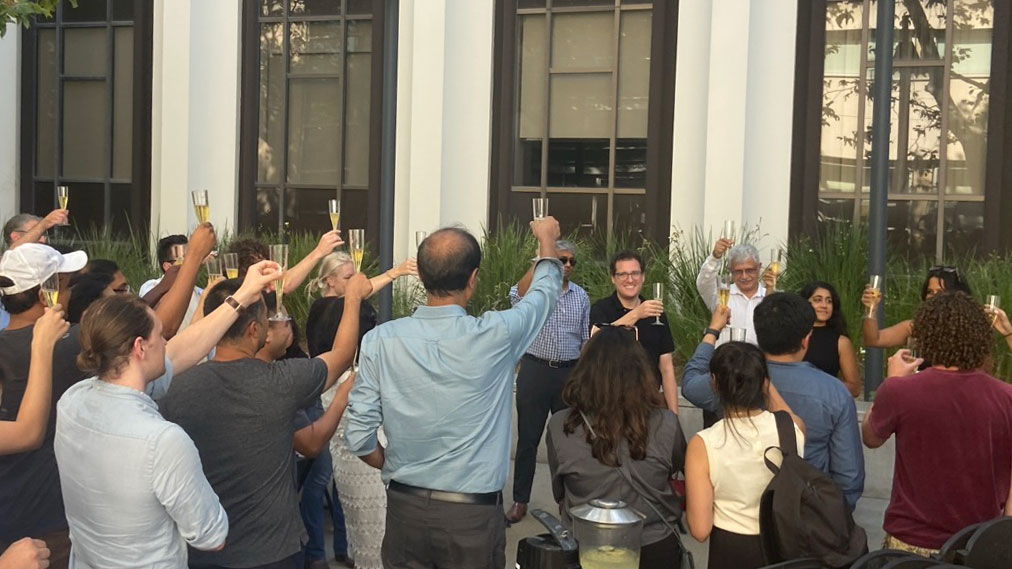
Andrew Perez defends his thesis


Read our newest publication, “Genome organization around nuclear speckles drives mRNA splicing efficiency” in Nature ►
Jimmy Guo defends his thesis


Mackenzie Strehle defends her thesis
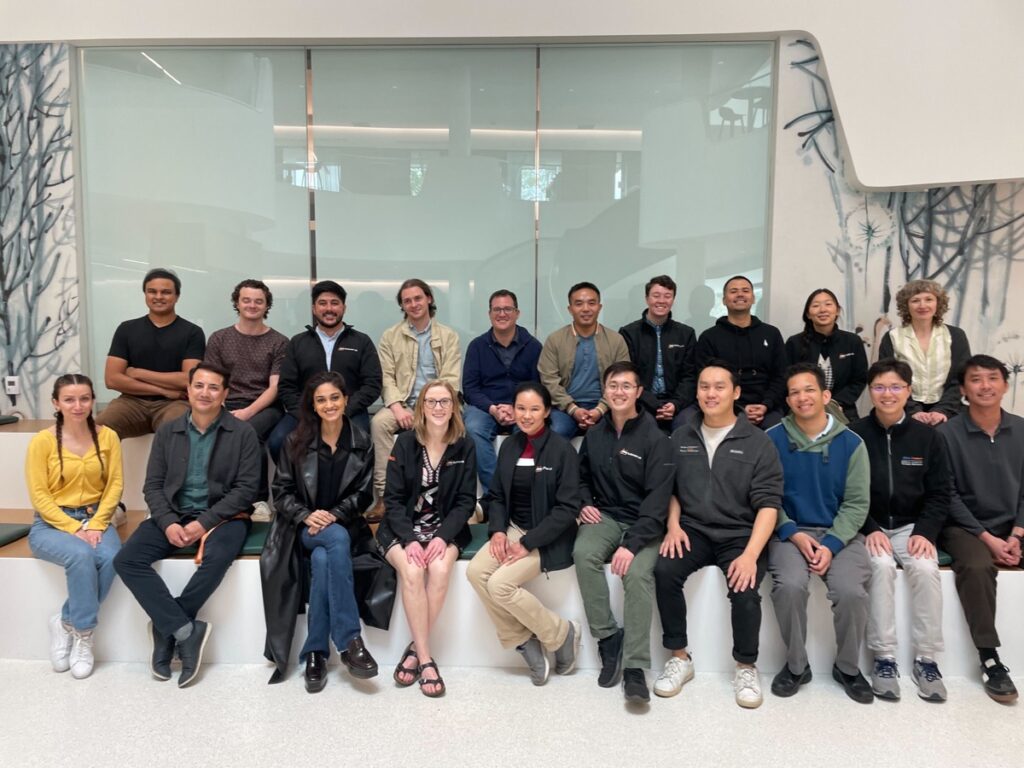
Welcome Jolo Ferrer!
Jolo Ferrer joins the lab as the newest Guttman lab graduate student!
